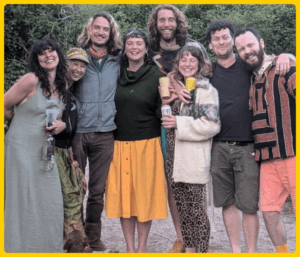
Project Home is a fully mutual housing co-operative run by its nine members
Location: Wales
Energy Rating: EPC C

They got together in Bristol, having met in 2022 through the city’s active community of groups exploring property ownership through non-traditional models.
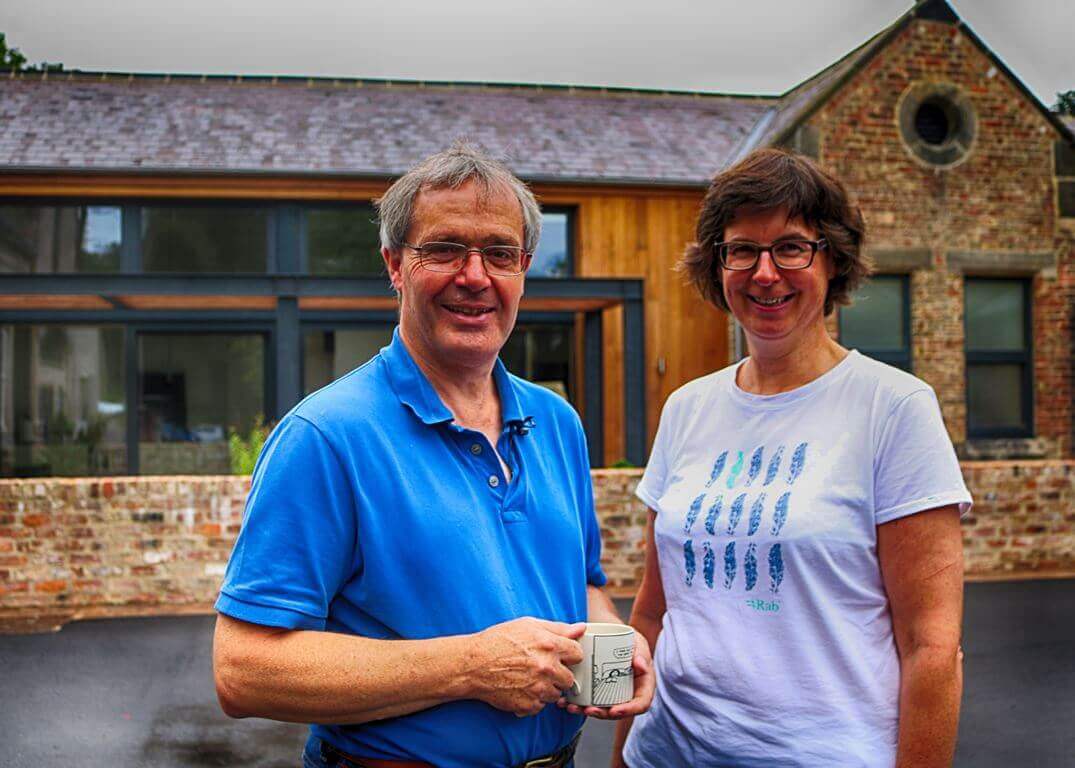
“There are lots of different groups of people in Bristol stuck in the rent trap,” said Adam Rich, Project Manager for Project Home and co-operative consultant.
“We decided we wanted an intentional community so a co-operative was the way to go.”
From 20 people interested initially, the nine-strong group was formed and spent the next 12 months building their community, developing and agreeing their collective values and learning the communication skills to be able to collaborate and live together.
Building a co-operative vision
They needed to decide where and how they wanted to live – for example, some co-operatives prioritise growing their own food to become self-sufficient but Project Home decided creating a shared home was what they wanted the most.
The next step was financial modelling, including creating their Loanstock, a mechanism through which funds can be raised through private loans made direct to the co-op. This is a method available only to co-ops and brought in money, mainly from friends and family of the co-op members.
After a year to create the group and agree how it would operate, it took a further 12 to 18 months to find a property. An early choice – a listed castle in the Welsh valleys – was ruled out because its function as a home would always be secondary to the fact it was a castle.
Finding the Brook
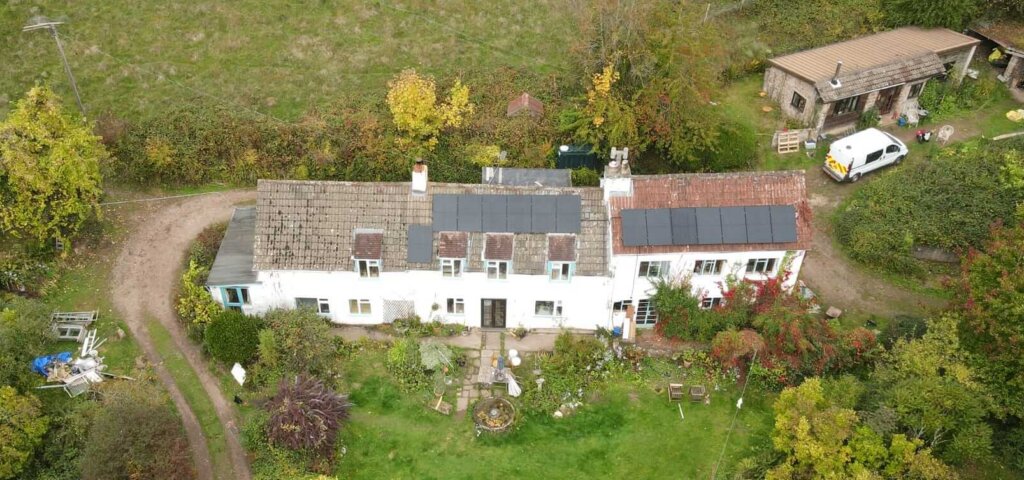
Then a visit to The Brook – a Welsh longhouse in the Wye Valley, complete with a tract of land – prompted an immediate and emotional reaction.
“It was perfect,” said Adam.
“Ecology are so experienced, they asked us all the right questions.
We really want to see this model grow – for those people a co-operative suits, it’s so important that this choice should be available.”
Adam Rich, Project Manager for Project Home and co-operative consultant
A community-led housing mortgage from Ecology, supplemented by the Loanstock funds, enabled the group to purchase The Brook, which at that point had an Energy Performance Certificate (EPC) with a G rating.
Retrofitting an historic home
The mortgage conditions required an EPC of C or higher within 12 months and the group identified some “obvious” ways to improve the EPC and planned a full retrofit.
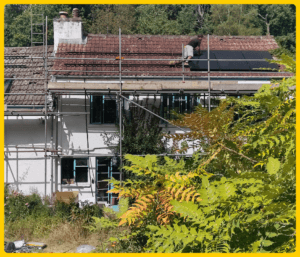
This didn’t stop them from moving in, in February 2025. Having allowed themselves 12 months to carry out the retrofit, this was completed in six months, including a month camped out in the garden while the most disruptive works were underway.
With support from ECO4 (the Energy Company Obligation scheme, through which energy companies fund home retrofits), Project Home replaced the oil boiler and old heating system with an air source heat pump and new pipework and radiators, as well as fitting PV panels on the roof.
The retrofit included adding insulation inside all the external walls of the 250-year-old cottage, which are not straight and up to a metre thick. The group were careful throughout to take care of the fabric of the building and retain its original character and features.
The improvements transformed The Brook’s EPC G rating to a C, only one point short of a B rating.
Creating a low-impact way of living
Next the group plans to install battery storage and add extensions to provide extra private living space in a low-impact building, to be constructed from locally-available, natural materials.

The house sits in an area of outstanding natural beauty but is within commuting distance of Bristol. Local high-speed broadband makes working from home possible, which suits the co-operative members, who have a range of skills and professions.
Adam said remote working made living in the countryside an option, meaning large houses in rural locations had become more viable for cohousing.
In the garden and surrounding land, the group is practising regenerative planting to support biodiversity and has restored the orchard and wildlife pond. Members have started to grow their own vegetables and hope to keep chickens.
Adam said undergoing training in non-violent communication and conflict resolution, with individuals committing to personal growth, had helped to create a harmonious environment, with clarity about what members of the group can expect from each other. They share their evening meal each night, taking turns to cook on a rota.
Sharing knowledge with other co-operatives
“We really want to see this model grow,” said Adam.
“It won’t suit everyone but for those people it does, it’s so important that this choice should be available.”
Having developed knowledge and skills around finance and planning to successfully create their home, Project Home is able to share that expertise with other co-operatives.
Want to learn more about Ecology’s Community-led Housing Mortgages?
Ecology supports community-led housing projects that prioritise sustainability, collaboration and long-term resilience. Our specialist mortgage lending helps co-operatives and cohousing groups create low-impact homes and communities.
Discover Ecology’s Community-led Housing Mortgages.